Wedding Invitation Wording for Divorced Parents: Every Scenario Covered

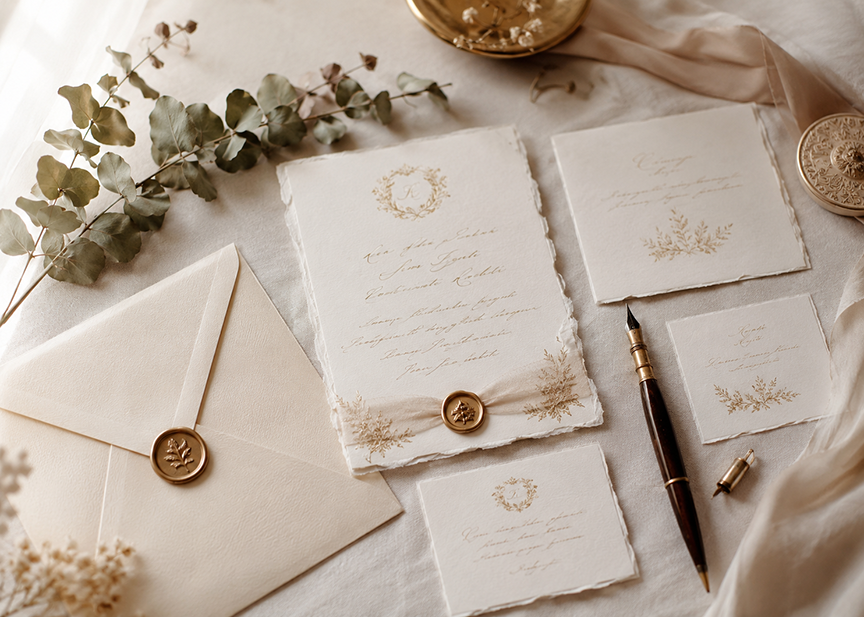
For couples whose parents are divorced, separated, remarried, or blended into new families, wedding invitation wording can feel like solving a diplomatic puzzle. Who goes first? Does a stepparent's name belong on the invitation? What if one parent isn't speaking to the other?
The good news: there is no single "correct" answer etiquette experts agree on universally — but there are well-established conventions that handle nearly every family situation gracefully. This guide walks through each scenario with real wording examples.
Table of Contents
Wedding Invitation Wording for Divorced Parents: The Core Principle
Before looking at specific examples, it helps to understand the underlying logic: the hosting line reflects relationships, not just finances. Traditionally, the hosting line named whoever paid for the wedding. Today, most etiquette guidance treats it as a way to honor the people who raised and supported the couple — regardless of who is writing the checks.
Three principles guide nearly every scenario:
Each parent's name typically stands alone on its own line — divorced parents are not joined with "and" unless they are both actively co-hosting in a unified way.
A parent's current spouse is only included if they are meaningfully involved — either financially contributing or having played a substantial parenting role.
Order can follow tradition (mother first) or be decided based on what feels right for the family — there is no longer a single hard rule.
Both Parents Hosting, Neither Remarried
This is the most straightforward divorced-parent scenario. Each parent is listed on their own line, without "Mr. and Mrs." combining them.
Mrs. Linda Carter and Mr. Robert Carter request the honour of your presence at the marriage of their daughter Emily Grace to Daniel Robert Hayes, Saturday, June 18, 2026
Note: Using "Mrs. Linda Carter" (her own first name, not her ex-husband's) signals she has reclaimed her maiden or own name use, which is now standard practice for divorced women on invitations.
One Parent Hosting Independently
When only one parent is hosting — whether due to finances, family dynamics, or simply being the primary point of contact — only that parent's name appears.
Mrs. Patricia Owens requests the honour of your presence at the marriage of her daughter Lauren Michelle to Christopher Daniel Brooks Saturday, August 22, 2026 at five o'clock
There is no need to explain or reference the other parent's absence from the hosting line. It is widely understood that this reflects practical hosting arrangements, not a statement about the relationship.
One or Both Parents Remarried
When a parent has remarried, the question becomes whether to include the new spouse. The answer depends on their level of involvement.
If the new spouse is not contributing financially or playing a significant parenting role, list the parent alone:
Mrs. Linda Carter requests the honour of your presence...
If the new spouse is contributing or deeply involved, include them using "and":
Mr. and Mrs. Gregory Whitfield (where Gregory is the stepfather, and Linda has taken his name or prefers to be listed this way)
Mrs. Linda Whitfield and Mr. Gregory Whitfield (if she keeps a different name from her husband)
When both biological parents have remarried, and both are contributing:
Mr. and Mrs. Gregory Whitfield and Mr. and Mrs. Robert Carter request the honour of your presence at the marriage of their daughter Emily Grace
This format lists the mother's household (with her new husband) and the father's household (with his new wife) as two separate hosting units, joined by "and."
Stepparents Who Helped Raise the Couple
When a stepparent has played a substantial role in raising the bride or groom — even without a financial contribution — many couples choose to honor that relationship by including them, sometimes with adjusted wording:
Mr. and Mrs. Robert Carter together with her mother and stepfather Mrs. Linda and Mr. Gregory Whitfield request the honour of your presence at the marriage of Emily Grace Carter
This wording explicitly distinguishes the stepparent's role while still including them meaningfully. It's an increasingly common solution for blended families where the parenting relationship matters more than the biological one.
One Parent Deceased
When one parent has passed away, the surviving parent is simply listed, without any reference to the deceased parent within the hosting line itself.
Mrs. Linda Carter requests the honour of your presence at the marriage of her daughter Emily Grace
Honoring the deceased parent elsewhere: Many couples choose to acknowledge a deceased parent through the wedding program, a reserved seat with flowers, a moment during the ceremony, or a small note such as:
"In loving memory of [Name], forever in our hearts."
This is typically placed on a separate keepsake or program rather than the formal invitation itself, keeping the invitation's hosting line clean and traditional.
Both Parents Remarried, All Contributing
For larger blended families where four parental figures are all involved and contributing, the invitation can include all four names, organized by household:
Mr. and Mrs. Gregory Whitfield and Mr. and Mrs. Robert Carter together with Mr. and Mrs. Henry Park and Mr. and Mrs. James Park request the honour of your presence at the marriage of their children
This is a more complex format reserved for situations where both partners' parents are similarly blended, and all four parental units are meaningfully present in the couple's life.
Estranged or Non-Speaking Parents
When a parent is estranged, uninvolved, or the relationship is strained, etiquette allows for quietly simplifying the hosting line without drawing attention to the situation.
Most common solution: List only the involved parent, or have the couple host themselves:
Sarah Anne Mitchell and Joshua Patrick Reilly invite you to celebrate their marriage
This approach sidesteps the issue entirely without anyone needing to ask questions. No explanation is owed to guests, and the invitation reads as completely normal.
The Couple Hosting Themselves
Increasingly, couples — especially when family dynamics are complicated — simply choose to host their own wedding regardless of who is paying. This neatly avoids every divorced-parent dilemma above.
Olivia Bennett and Marcus Chen request the pleasure of your company as they celebrate their marriage
This format has become widely accepted and carries no negative connotation. It reflects modern norms around independence and shared responsibility, and is often the simplest, lowest-stress choice for blended or complicated families.
Common Mistakes to Avoid
Combining divorced parents with "Mr. and Mrs." — Unless they have fully reconciled and are jointly hosting in a unified way (rare), divorced parents should not appear as "Mr. and Mrs. [Father's Name]" together.
Using the ex-spouse's surname incorrectly. If the mother has reverted to her maiden name or taken a new husband's name, use her current legal or preferred name — not her ex-husband's surname by default.
Forgetting to ask both parents their preference. Before finalizing wording, it is worth privately confirming with each parent how they would like to be listed — particularly around inclusion of new spouses. This avoids hurt feelings discovered only after invitations are printed.
Overexplaining family dynamics on the invitation. The formal invitation is not the place to clarify complicated family history. Keep the hosting line simple; reserve any explanations for private conversations, not printed text.
Listing a stepparent without discussing it with the biological parent first. Even with good intentions, surprising a parent by giving their ex's new spouse equal billing can create unnecessary tension. A quick conversation beforehand prevents this.

FAQ: Wedding Invitations for Divorced Parents
Should divorced parents be listed together or separately on a wedding invitation? Each divorced parent typically appears on their own line, without being joined as "Mr. and Mrs." This holds even if both parents contribute to the wedding and maintain a cordial relationship.
What if my mother remarried and uses her new husband's last name? List her with her current name and title — for example, "Mrs. Linda Whitfield" — rather than her maiden name or her ex-husband's surname, unless she specifically prefers otherwise.
Should I include my stepparent on the invitation? This depends on their role and relationship with you. If they helped raise you or are contributing meaningfully to the wedding, many couples choose to include them, often with wording that distinguishes them as a stepparent. If the relationship is more distant, it's entirely acceptable to leave them off the formal hosting line.
How do I word an invitation if one parent is deceased? List only the surviving parent in the hosting line, with no reference to the deceased parent within that line. Many couples choose to honor a deceased parent separately, such as through the wedding program or a dedicated note.
What if my parents are divorced and one of them isn't invited or involved? If a parent is estranged or not part of the wedding planning, it's acceptable to list only the involved parent or to have the couple host the wedding themselves. No explanation is required or expected by guests.
Is it acceptable for the couple to just host the wedding themselves to avoid family complications? Yes, completely. This has become a widely accepted modern choice and works well for any family situation, especially complicated or blended ones. It carries no negative implication about family relationships.
Continue planning your wedding invitations:

Comments